Rosh Hashanah 2024 begins
Wednesday October 2 and ends Friday October 4
What is Rosh Hashanah?
Rosh Hashanah is a two-day Jewish holiday during Tishrei (October) that celebrates the start of the new year. It’s the birthday of the world, as that’s the date G-d created the world, 5784 years ago. This literal translation of Rosh Hashanah is ‘Head of the Year.’ It is named as such because, like the head controlling the body, the day of Rosh Hashanah affects the whole year.
It’s a time to thank G-d for a successful year, reflect and repent of the past year’s misdeeds, and crown G-d as the one and only King of the world. At the same time, G-d judges the actions of all human beings and determines what the next year will be like. For this reason, we pray for G-d to judge us favorably and grant us a successful year with ample sustenance, health, and happiness.
How is Rosh Hashanah celebrated?
As with every holiday, it begins at sundown, when candles are lit. Like on Shabbat, all creative activity is halted over the two days. There are extensive prayers at night and during the day and festive meals both night and day.
What are the customs on Rosh Hashanah?
There are several customs during the days of Rosh Hashanah:
- The shofar– The shofar is a ram’s horn that is blown several times over the holidays during the prayers. Altogether, there are 100 shofar blasts every day of Rosh Hashanah. Although women and children cannot always attend all the services (and therefore be present for all 100 blasts), 30 mandatory blasts are sounded in the morning, when women and children are invited to attend.
- Greetings- During the first night, we extend specialized greetings to everyone we encounter, wishing them a good year. We bless them that they should merit a sweet, happy year, be inscribed in the Book of Life, and know only joy and happiness.
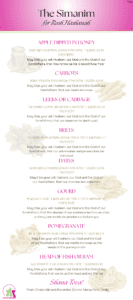
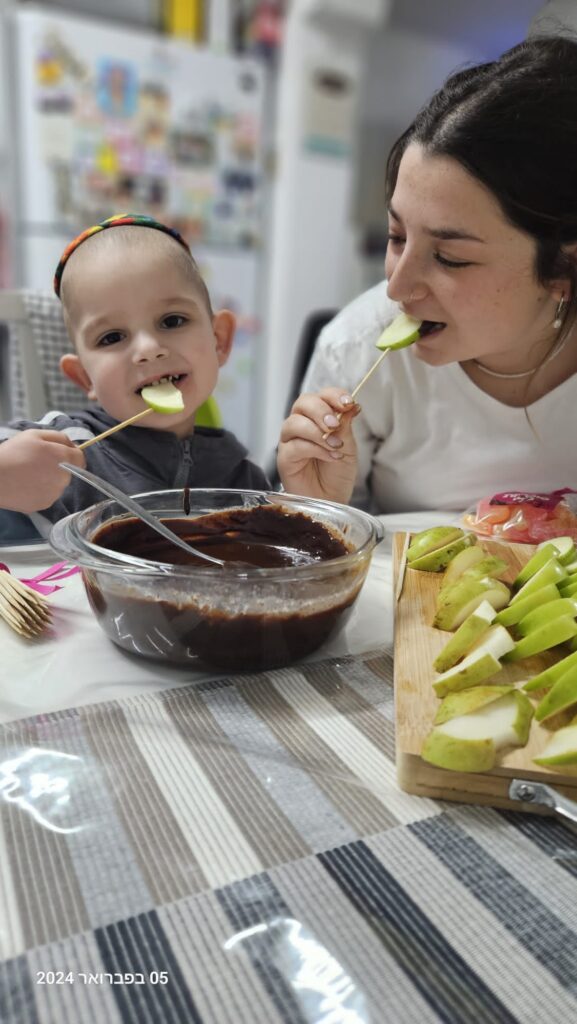
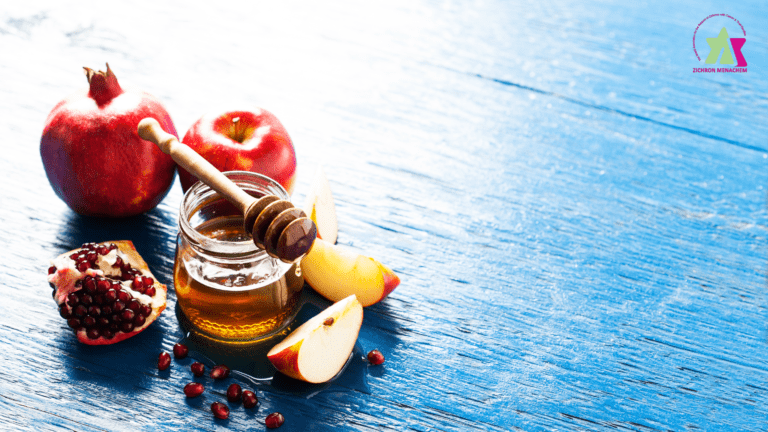
- Food—Other than round challahs to represent crowns (or the eternal cycles of life), many symbolic foods are eaten during the meals as a prayer. For example, a slice of apple is dipped in honey, with a prayer to merit a ‘sweet new year.’ Many also dip their challah into honey.
- Tashlich- Traditionally, on the afternoon of Rosh Hashanah, we go to a river with fish and empty our pockets of our misdeeds to the fish. We recite special prayers to eliminate our previous negative actions and merit a happy, successful year ahead.
Symbolic food on Rosh Hashanah:
Food carries much meaning on Rosh Hashanah. Jews from around the world have different traditions regarding the symbolic foods they eat. Here are some foods that we eat during these days:
- Head of a fish or ram- This is accompanied by a prayer to ‘be the head and not the tail’ in the coming year. We express the hope that we will be successful and self-sufficient instead of reliant on others.
- Pomegranate- The many seeds in a pomegranate are parallel to the many commandments in the Torah. We ask to merit fulfilling many of the commandments in the following year.
- Dates- The Hebrew name for dates is ‘temarim,’ reminiscent of the word ‘tam’- to end. We express the wish to end all grievances and misdeeds associated with the previous year and merit only good for the year ahead.
- Leeks- ‘Karti’ is the Hebrew word for leeks, which is similar to ‘yikartu’- to cut off. We say a prayer to remove all our enemies and experience an enjoyable, peaceful year.
- Carrots- In yiddish (a Jewish dialect of German), carrots are ‘meren,’ which also means to increase. We ask G-d to help us increase our merits so we can enjoy a happy year ahead.
- Black-eyed peas/ beans- Similar to the Hebrew word ‘yirbu’- to increase- we ask G-d to increase our merits and allow us to experience a sweet new year ahead.
- Beetroot- Like leeks, the Hebrew term for beets is ‘salka,’ similar to another word in Hebrew that translates to removal. We ask to remove our enemies and live a happy life.
Zichron Menachem is an organization in Israel that supports children with cancer under the age of 21 and their families. Our goal is to help every child with cancer and their closest family members get through the difficult illness with support, fun experiences, and the necessary therapeutic intervention. We strongly believe that sick children (and their families) need to be in an emotionally healthy place to have a reason to live and fight their debilitating illnesses.